Research
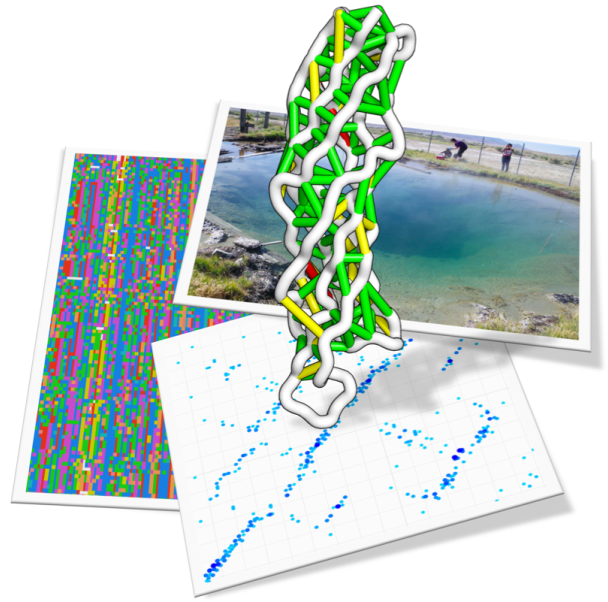
For billions of years, nature has been conducting the ultimate experiment. Today—with global sample collection, single-cell metagenomics, and massive sequence datasets—we can finally read the notes.
Our lab develops computational methods, deep learning models, and structural biology tools to explore three core frontiers:
01 • EVOLUTION & SEQUENCE
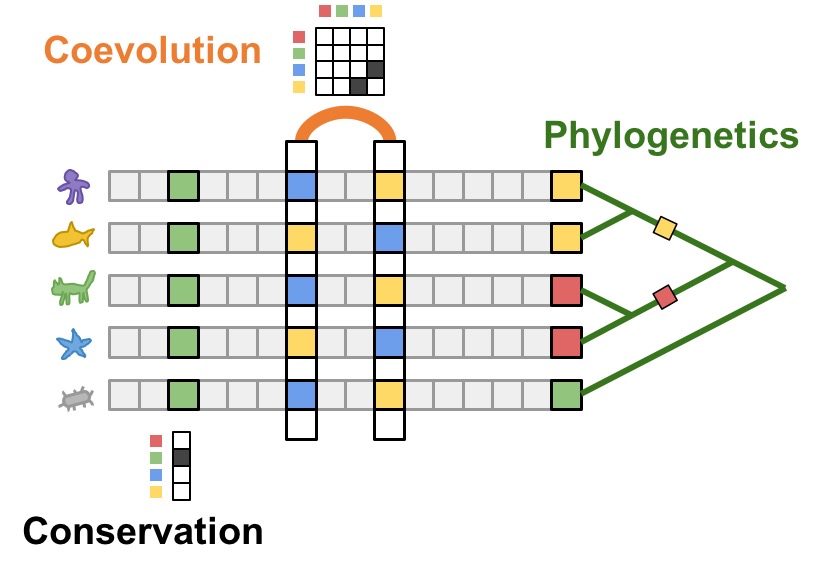
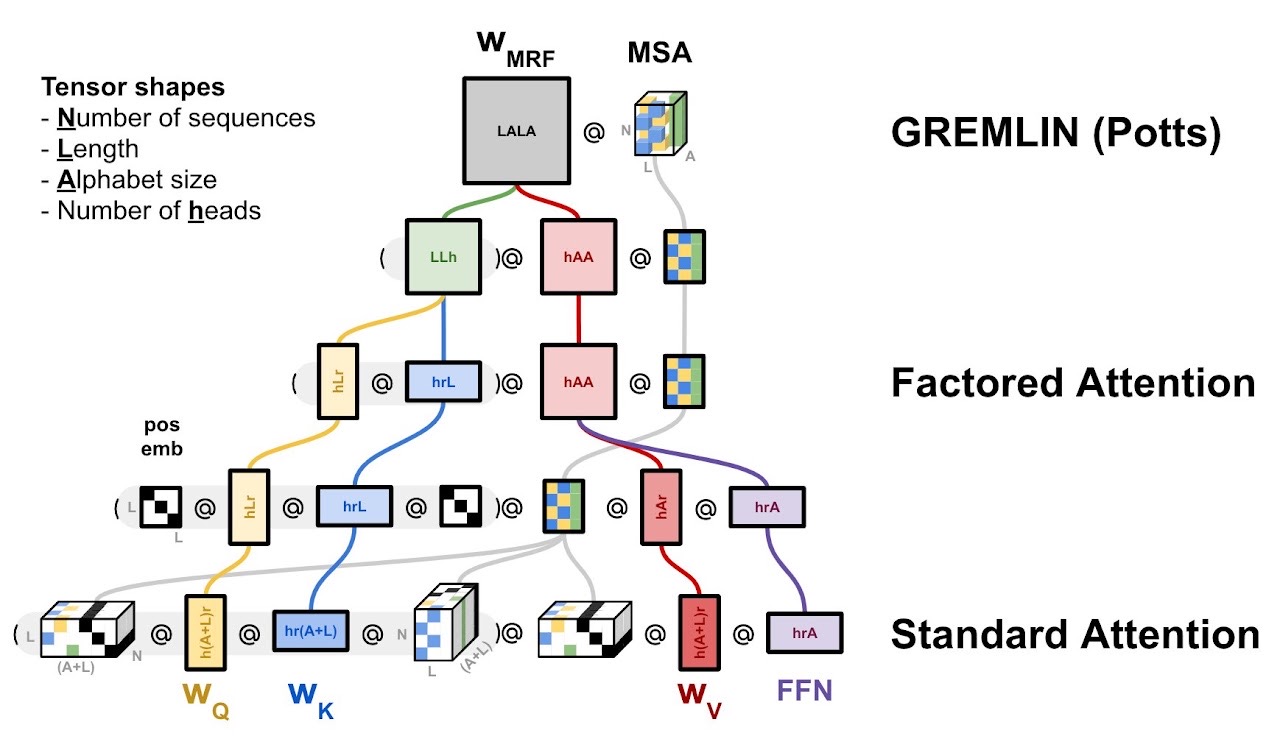
A unified statistical model of protein evolution — integrating phylogenetic, genomic, structural, and functional constraints.
How do evolutionary constraints shape generative sequence models?
Can we disentangle phylogenetic signal from true coevolutionary couplings?
Recent Theme Publications
02 • DIFFUSION & LANDSCAPES
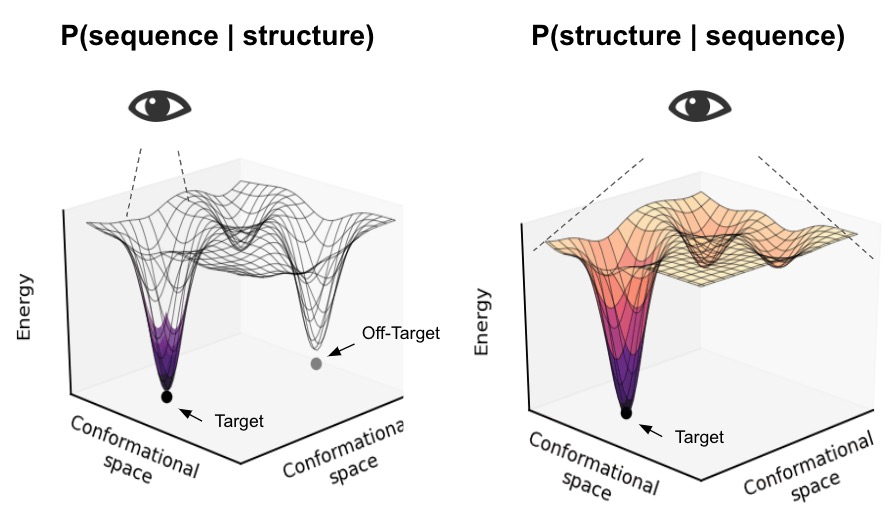
Modeling the protein conformational and folding landscape for structure prediction and design.
Can we generate stable de novo proteins by jointly optimizing sequence & structure landscapes?
How can generative diffusion models serve as effective statistical potentials?
Recent Theme Publications
03 • METAGENOMICS & DARK MATTER
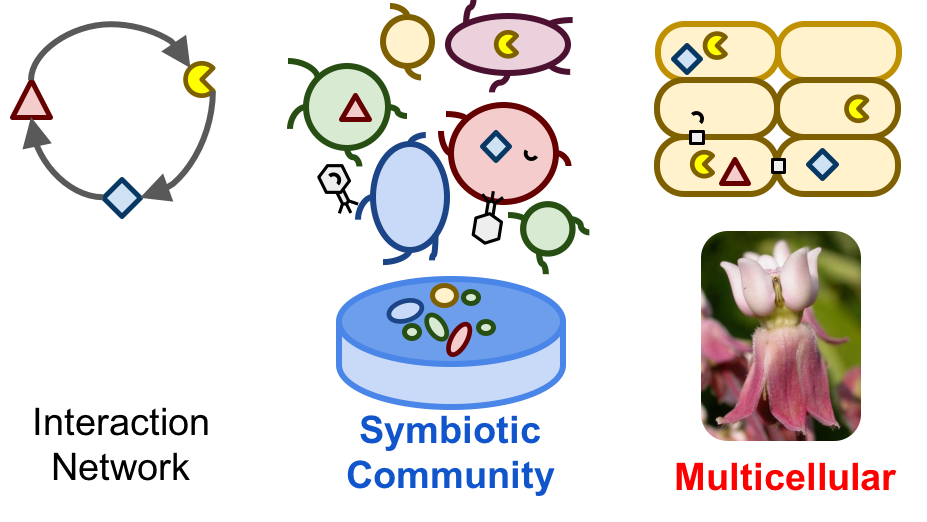
Mining metagenomic "dark matter" for new protein families, functions, and interactions — and probing the early evolution of multicellularity.
What unknown protein families and functional universe lie in uncultivated metagenomes?
How did early molecular complexes evolve to enable multicellular life?